
South Charleston Previous Resident Sources
No single roll lists every person who occupied a South Charleston address. The useful source changes with the time period and question. Parcel cards and deeds establish titled ownership. Directories can place a named householder at an address between census years. Census schedules add household context through 1950, the latest public federal census in 2026. Maps and permits describe the structure, while probate and obituaries can explain why a name disappears or title passes to heirs.
| Source | Years Covered | Where Held | Evidence Preserved |
|---|---|---|---|
| Kanawha deed books | 1790-1910 on archive microfilm | WV State Archives and clerk books | Transfers and legal descriptions |
| Grantor/grantee indexes | 1790-1946 / 1795-1967 | WV State Archives | Seller and buyer paths to deeds |
| Polk directories | 1908-present | KCPL, library use | Names, addresses, occupations |
| Charleston directories | 1874-75 through 2016, gaps | WV State Archives | Older household and street clues |
| Federal census | 1910-1950 now public | Federal services and libraries | Households and local context |
| Sanborn maps | 1884-1933 collection | WVU WVRHC online | Building footprint, use, materials |
| City permits | Online coverage not posted | City Engineering | Requested work or inspection evidence |
Start with the newest reliable fact and move backward. A current parcel and its deed book and page are often the cleanest first step. For an early household, a directory or census name may begin the search, but it still must match the same lot, block, or subdivision.
South Charleston Previous Residents by Parcel
The Kanawha County Property Record Search accepts parcel address, owner, account, district, map and parcel, property type, legal description, or deed book and page. Save the street address, current owner, mailing address, parcel identifier, legal description, deed reference, sales history, and assessment year. The situs address means the physical location. It may differ from the address where the tax bill is mailed.
That distinction prevents a common mistake. An owner may be a person, city, company, trust, or estate. A mailing address may be a post office box or another town. Neither fact proves who sleeps in the building. The card is a route into the deed chain, not a household list. Once the parcel and legal description are known, the same land can be followed even when address labels change.
The West Virginia Property Viewer connects that evidence to a mapped parcel. The captured viewer below is the assigned visual source for this South Charleston address trail.
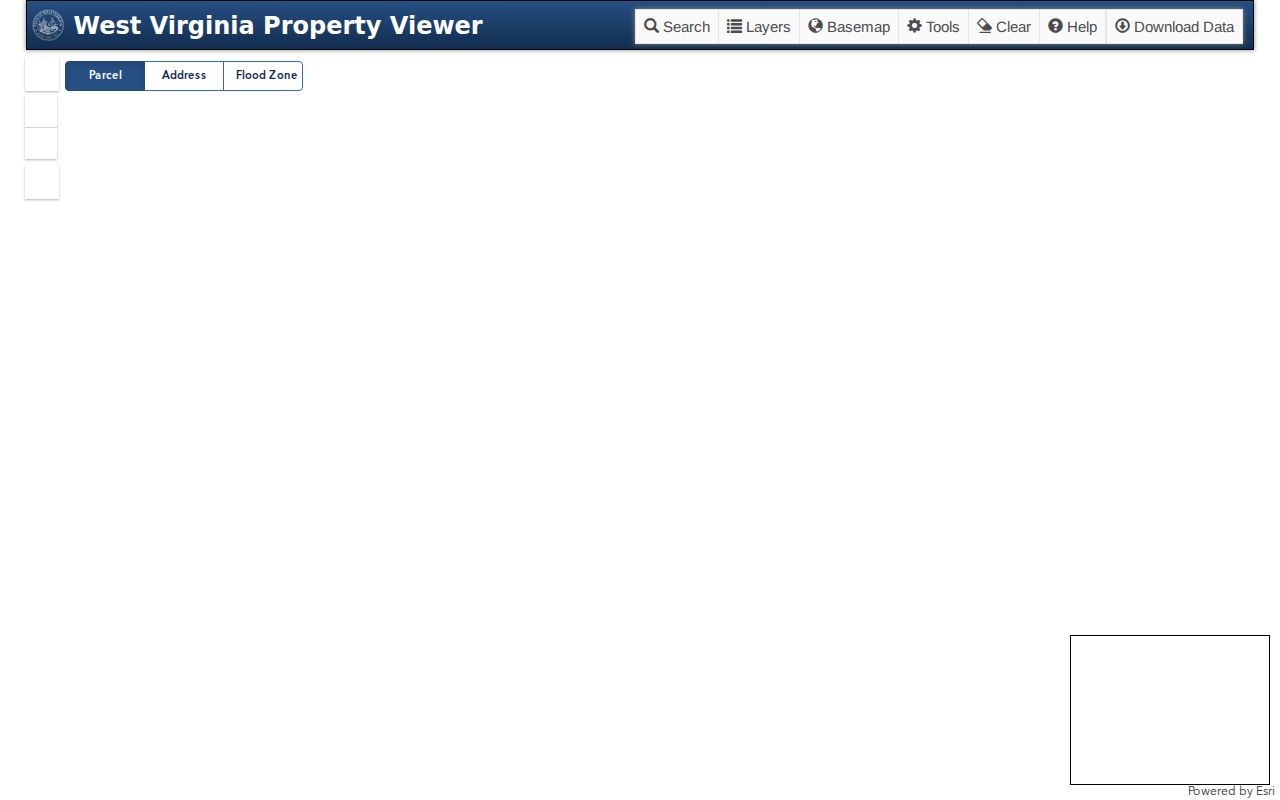
Preserve the GIS ID and parcel shape before moving from the viewer to the assessor or clerk. They help distinguish nearby lots with similar address text.
South Charleston Resident Deed Trails
The Kanawha County Clerk holds deeds and liens, but no official public online grantor and grantee index was located. The working route is the County Clerk Record Room at 409 Virginia Street East in Charleston, phone 304-357-0240. Bring a book and page, legal description, owner, and parcel reference rather than asking staff to begin from a vague street memory.
- Retrieve the current parcel card and copy its legal description and deed book and page exactly.
- Obtain that recorded instrument. Preserve grantor, grantee, recording date, type, consideration if shown, and referenced plat.
- Search the seller, the grantor in that deed, as a grantee in an earlier purchase.
- Follow the parent tract or parcel split if an older instrument conveyed more land than the modern lot.
- Repeat through clerk books, then use State Archives microfilm where its listed dates apply.
- Grantor
- The person or entity conveying an interest in land.
- Grantee
- The person or entity receiving that interest.
- Chain of title
- The linked sequence of recorded ownership transfers for the same land.
- Legal description
- Lot, block, subdivision, boundary, or tract wording that identifies land more reliably than a postal address.
A deed proves a recorded conveyance. It does not identify every past resident. Pair each transfer with a dated directory, census, obituary, or permit source before calling an owner an occupant.
South Charleston Records Across Archive Dates
The West Virginia State Archives county inventory gives firm limits for older title work: deed books from 1790 through 1910, grantor index from 1790 through 1946, and grantee index from 1795 through 1967. Trust deeds run from 1855 through 1910 with an A-Z index. These dates describe the archive series, not the end of county record keeping.
Later twentieth-century work returns to the local Record Room because no verified online Kanawha deed index or imaging cutoff was found. The archive also lists homestead records from 1874 through 1944 and Spring Hill Cemetery deeds from 1876 through 1915. Cemetery deeds are leads, not burial records. Pair them with an obituary, church source, or probate file.
Note: Ask whether a copy is plain, certified, or inspection-only before ordering, since no verified county deed-copy fee was documented.
Pair South Charleston Directory Years
For past residents, work between directory entries and census years. The KCPL Polk collection covers Charleston and neighboring suburbs from 1908 to the present, but it is in-library only. State Archives lists Charleston-titled volumes beginning in 1874-75 and continuing through 2016 with gaps. South Charleston coverage varies by edition, so a missing address does not prove a household was absent.
Use a repeatable process:
- Choose the directory nearest a known deed transfer and check both name and street sections when available.
- Repeat in the next volume, recording spelling, spouse, occupation, and printed address.
- At a public census year, compare names, ages, relationships, and nearby addresses.
- Return to later directory years to learn when the household moved, changed names, or left the run.
The collection itself is detailed on the South Charleston directory book page. Here, each volume serves one address timeline. A criss-cross directory is arranged by street or phone, not just surname. An enumeration district is the area assigned to a census worker. Both help when the occupant name is unknown.
South Charleston Records Meet Sanborn Maps
The WVU Sanborn map collection provides Charleston sheets for 1884, 1888, 1893, 1897, 1902, 1907, 1912, 1918, 1919, 1922, and 1933. The 1933 set is especially useful because it is labeled Charleston including South Charleston. Earlier sheets can supply context where the future city area appears.
The assigned archive image introduces that digital collection.
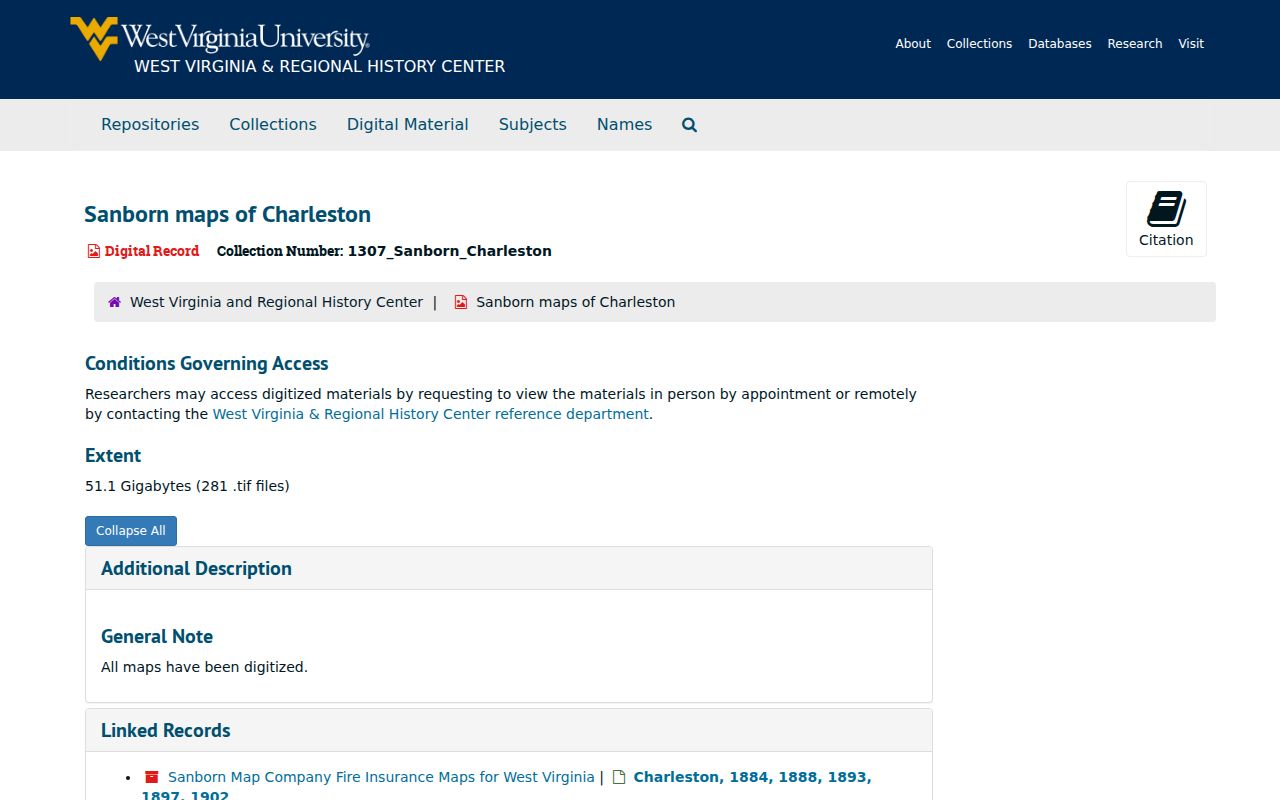
A sheet can show whether a structure existed, its footprint, material, use, and nearby setting. It does not name each occupant. Compare the mapped building with the legal description and a directory from a close year. A changing footprint may explain an address break even when ownership stays the same.
Bridge South Charleston Address Labels
South Charleston's planned street grid followed the Kanawha Land Company's purchase of about 1,800 acres in 1906. That history makes subdivision, lot, and block terms useful. A current parcel may carry a Jefferson Park description even if an early deed lacks the modern number.
Postal wording adds another trap. USPS changed the preferred last line for ZIP 25303 from Charleston to South Charleston on October 4, 2014. Search both city labels in directories, news archives, and address indexes. Try street suffix variants and the legal description too. No verified citywide street-renumbering or annexation year was found, so no clean conversion rule should be assumed.
Search key. Keep four versions together: current address, older Charleston postal form, parcel ID, and subdivision or lot-and-block description.
South Charleston Resident Address Permits
The South Charleston Engineering Department at 238 4th Avenue issues permits and handles zoning and building-code questions. Its page shows fees, but no searchable permit or code-case index was found. Request an address file at the office or under the West Virginia Freedom of Information Act, naming the address, record type, and a reasonable date range.
A released record may date an alteration, demolition, inspection, or zoning event. Exact permit fields were not confirmed in a public sample, so owner, contractor, valuation, and work description are request targets, not promised results. Utility customer lists were not found as public sources. Permit evidence concerns the building, not a complete roll of previous residents.
South Charleston Resident Probate Trails
When a name stops appearing, search newspapers and then the Kanawha County Fiduciary and Probate office. An obituary may connect a full name, spouse, former home, and death date. Estate records can name a fiduciary or heirs and explain why title moved to an estate or relative.
The office is at 407 Virginia Street East in Charleston, phone 304-357-0125. Its checklists describe estate intake, but files may still be incomplete or restricted. KCPL Local History and Genealogy staff provide newspaper and obituary help. Supply the full name, date range, address variants, and relatives. Probate supports family and heir research, but does not prove every beneficiary lived in the house.
Use South Charleston Resident Records Lawfully
A sound South Charleston previous residents timeline distinguishes owners, occupants, relatives, and officials. Owners may live elsewhere. Renters may appear in a directory or census without entering the deed chain. A mapped structure may predate every name source. Label each claim by evidence and date rather than merging all roles into one household.
These records support genealogy, heir searches, preservation work, and curiosity about who lived here before. Living people deserve care. West Virginia's Address Confidentiality Program can substitute an address for qualifying survivors, while covered-person redaction can remove residential details. Never try to defeat those protections.
Lawful use. Research past households for legitimate personal or historical purposes. West Virginia law prohibits using address information to stalk, harass, threaten, or harm anyone.